HEU‑EFS at HTAi 2026: Advancing Patient‑Centred Innovation
From 06–10 June 2026, the global Health Technology Assessment (HTA) community will gather in Istanbul for HTAi 2026, an important moment to reflect on how innovation is evaluated and brought into healthcare systems.
At this year’s conference, HEU‑EFS will contribute to the discussion by focusing on one key question: how can Early Feasibility Studies (EFS) better serve patients across Europe?
Early Feasibility Studies are a crucial step in the development of innovative medical devices. Yet across Europe, approaches to EFS remain fragmented, making it harder to generate consistent evidence and ensure timely access to new technologies. The work presented by HEU‑EFS, in collaboration with the European Patients’ Forum (EPF) and Global Heart Hub, explores how a more harmonised and patient‑centred approach can help address this challenge.
A central element of this work is the active involvement of patients themselves. Through a dedicated Patient Advisory Group, individuals and caregivers across different disease areas have contributed their perspectives on how EFS are designed, communicated, and experienced.
Their input highlights a clear need for:
- more accessible and transparent information
- stronger communication throughout studies
- and greater support for participants
By bringing these insights together, the initiative proposes a more structured and inclusive approach to EFS, one that not only strengthens evidence generation but also ensures that innovation better reflects real patient needs.
Ultimately, this work goes beyond individual studies. It contributes to a broader shift towards more trustworthy, inclusive, and effective healthcare innovation in Europe, where patients are not just participants, but active partners in shaping the future of medical technologies.
Stay tuned for updates from HTAi 2026 and follow how HEU‑EFS is helping drive a more patient‑centred approach to innovation.
HEU-EFS at ISPOR 2026
HEU-EFS is proud to announce our participation in ISPOR 2026.
The Professional Society for Health Economics and Outcomes Research, where global leaders across health economics, outcomes research, and healthcare policy come together to shape the future of evidence generation and healthcare decision-making.
As innovation continues to transform healthcare systems worldwide, ISPOR provides a unique platform for collaboration, knowledge exchange, and discussions on advancing patient-centered, data-driven solutions.
During the event, HEU-EFS will engage with international experts, researchers, policymakers, and industry stakeholders to explore how innovation, evidence generation, and collaboration can strengthen the EU MedTech ecosystem and support better outcomes for patients.
We look forward to contributing to meaningful conversations on the future of healthcare evaluation, access, and sustainable innovation.
HEU-EFS Launches Task 3.1.6 on Support and Reimbursement Conditions for Investigational Medical Devices
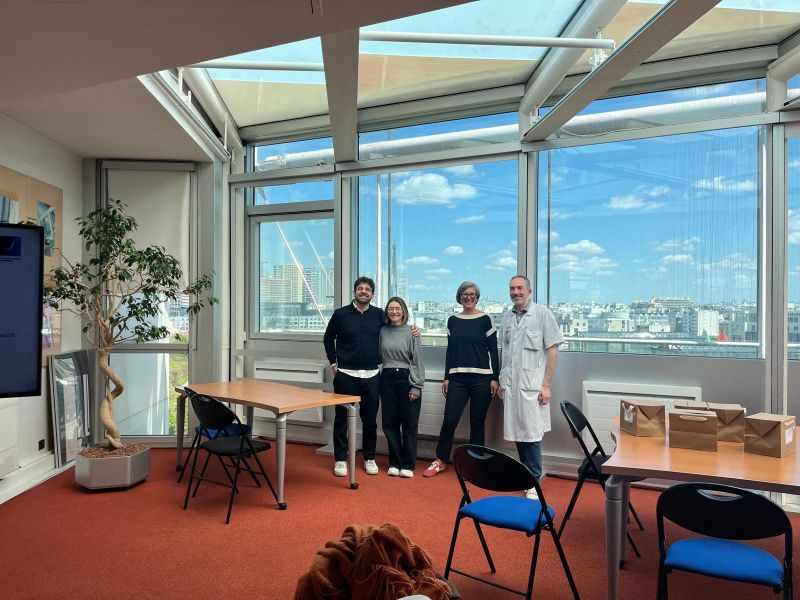
The HEU-EFS consortium has officially launched Task 3.1.6, bringing partners together to map support and reimbursement conditions for investigational medical devices across Europe.
This important activity represents a key step toward enabling more effective Early Feasibility Studies (EFS), supporting the uptake of medical innovation, and contributing to the enhancement of Europe’s competitiveness in the medtech sector.
Collaborative Leadership Across the Consortium
The task is jointly led by SDA Bocconi and Greater Paris University Hospitals – AP-HP, with contributions from partners across the HEU-EFS consortium.
By pooling expertise, knowledge, and resources from across the partnership, the consortium aims to build a comprehensive understanding of the current landscape and identify practical approaches to support innovation and patient access.
As the work progresses, HEU-EFS will continue sharing updates and insights from this important initiative.
Stay tuned for more developments in the coming months.
HEU-EFS Mid-Term Virtual Consortium Meeting Marks Key Milestone in Year 3
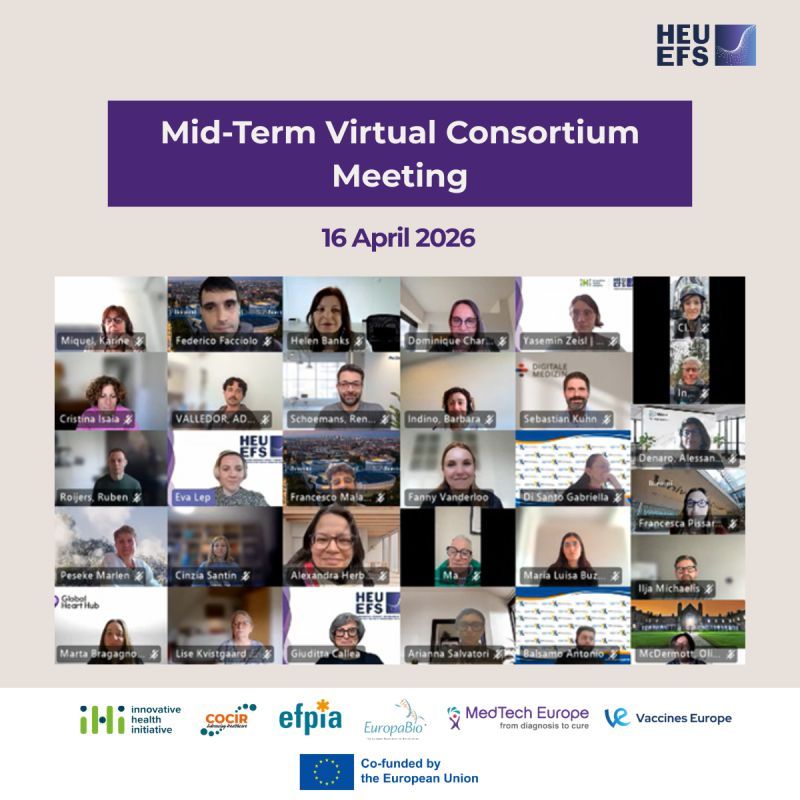
On 16 April 2026, the HEU-EFS consortium gathered online for its Mid-Term Virtual Consortium Meeting, bringing together project partners to reflect on progress achieved so far and align on priorities for the next phase of the project.
The meeting marked an important milestone in Year 3 of HEU-EFS and provided a valuable platform for collaboration, strategic discussion, and knowledge exchange across the consortium.
Reviewing Progress and Shaping the Next Phase
Throughout the meeting, partners reviewed achievements across multiple Work Packages (WP2–WP9), highlighting the progress made toward advancing a harmonised European framework for Early Feasibility Studies (EFS) in medical devices.
Key discussions focused on:
- Project progress and overall impact achieved to date
- Developments in the evolving EU regulatory landscape
- Newly established Task Forces related to MDR revision, Digital Health Technologies, and R&D incentives
- Pilot use cases and engagement with National Competent Authorities
- Dissemination activities, project management updates, and upcoming milestones
The consortium also discussed future priorities and preparations for upcoming meetings, including the Annual Consortium Meeting scheduled to take place in Oslo in July 2026.
Strengthening Collaboration Across Europe
The meeting demonstrated the continued strength of collaboration across the HEU-EFS consortium, with partners contributing expertise from regulatory, clinical, academic, industry, and public health perspectives.
We would like to sincerely thank all consortium partners for their valuable contributions, active engagement, and continued commitment to the project’s objectives.
HEU-EFS at The MedTech Forum 2026: Advancing Early Feasibility Studies in Europe
rom 11–13 May 2026, the HEU-EFS project joined leading innovators, policymakers, researchers, patient representatives, and industry stakeholders at The MedTech Forum 2026 in Stockholm to discuss the future of medical technology in Europe.
As part of the event, HEU-EFS hosted a panel discussion titled:
“Accelerating Early Feasibility Studies for Medical Devices in Europe”
Moderated by Niklas Blomberg, Executive Director of the Innovative Health Initiative (IHI), the session brought together a diverse group of experts representing patient advocacy, academia, regulatory affairs, public health, and industry.
Panel Speakers
- Marta Bragagnolo
- Maria Luisa Buzelli
- Karin Fricke
- Tom Melvin
- Alexandra Poulsson
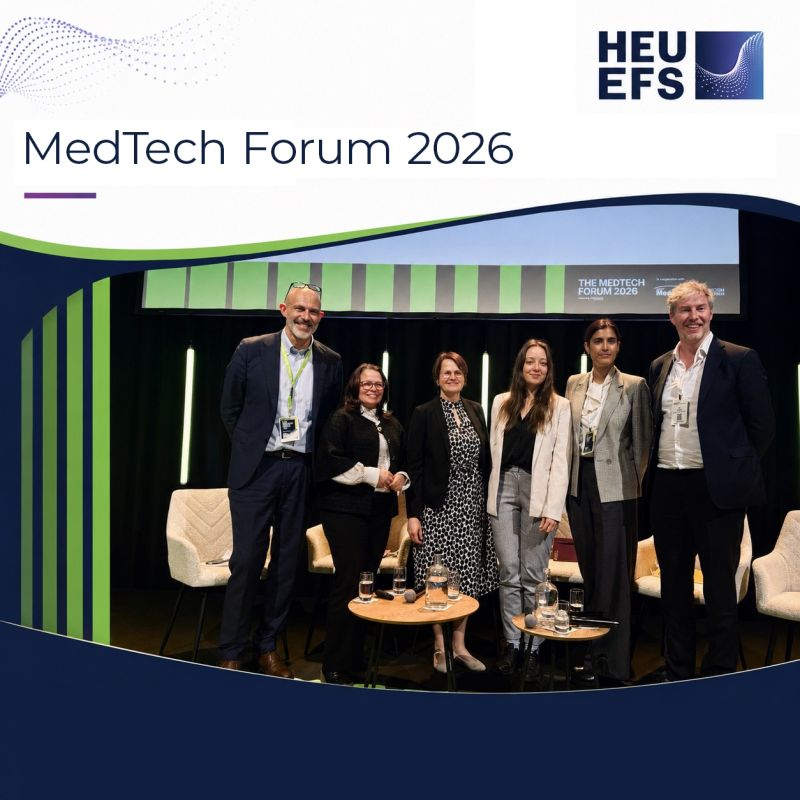
The discussion explored how a harmonised European framework for Early Feasibility Studies (EFS) could help accelerate innovation while improving patient access to breakthrough medical technologies.
Panelists shared insights on the importance of collaboration between public and private stakeholders through the Innovative Health Initiative (IHI), highlighting how coordinated efforts can strengthen Europe’s position as a global hub for medical device research and development.
Key themes included:
- Improving pathways for early-stage clinical investigation in Europe
- Enhancing collaboration across regulators, industry, academia, and patient organisations
- Creating a more predictable and efficient EFS environment
- Supporting faster access to innovative technologies for patients
- Strengthening Europe’s competitiveness in medtech innovation
The session reinforced the shared commitment across the European medtech ecosystem to build a more harmonised and innovation-friendly environment for Early Feasibility Studies.
HEU-EFS, supported by the Innovative Health Initiative (IHI), continues to work toward making this vision a reality by fostering collaboration and contributing to the development of a more effective EU EFS framework.
We thank everyone who joined the discussion in Stockholm and look forward to continuing the conversation on the future of MedTech innovation in Europe.
bout HEU-EFS
The HEU-EFS project aims to advance the development of a harmonised European framework for Early Feasibility Studies in medical devices, supporting innovation while ensuring patient safety and regulatory excellence.
Italy’s new EFS Guidelines: a milestone for Europe’s medtech innovation ecosystem
May 2026
Early Feasibility Studies (EFS) are a critical step in the medical device evidence‑generation lifecycle. They allow innovators to assess initial safety, usability, and performance of an innovative device at an early stage, before the final design is locked, while ensuring patient protection and regulatory oversight.
For years, Europe has struggled to retain early‑stage medical device studies. Fragmented national procedures, rising compliance costs under the EU Medical Device Regulation (MDR), and the absence of a structured early‑innovation pathway have pushed first‑in‑human and early feasibility trials to other regions. Italy’s newly published National Guidelines on Early Feasibility Studies for Medical Devices (February 2026) aim to change that dynamic.
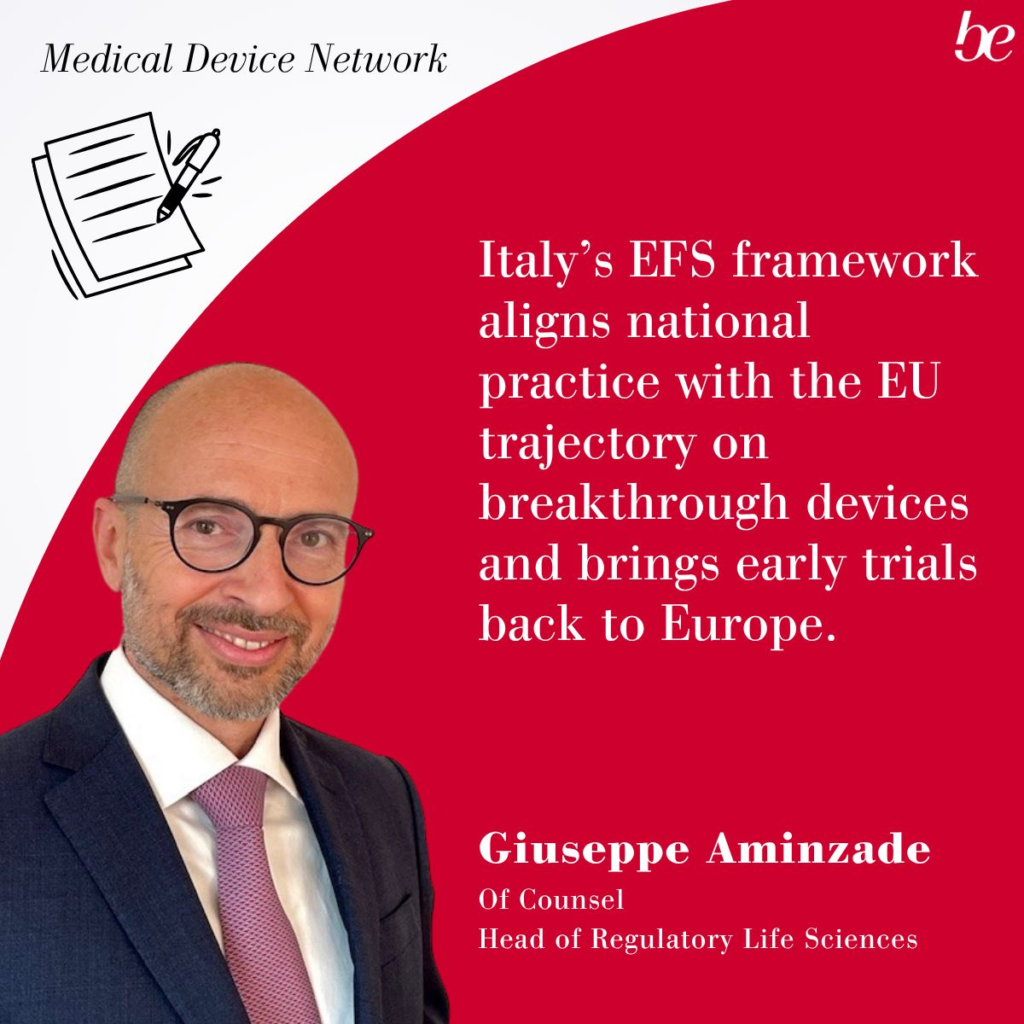
The Italian Guidelines establish a clear, MDR‑compliant framework for conducting EFS, explicitly anchoring them under the MDR clinical investigation architecture rather than national exemptions. This approach provides legal certainty and regulatory predictability, two elements that have been historically lacking for early‑stage studies in Europe.
Crucially, the framework is designed around the specific nature of EFS. It allows small sample sizes, staged enrolment, adaptive and modular protocols, and proportionate documentation requirements aligned with early development. Streamlined authorisation timelines and centralised ethical review are intended to make EFS faster to initiate, without compromising safety or scientific integrity.
This national step is closely aligned with the objectives of HEU‑EFS (Harmonised Approach to Early Feasibility Studies for Medical Devices in the European Union). Italy’s Guidelines reflect the core HEU‑EFS principles: harmonisation across Member States, proportionality, lifecycle evidence generation, and practical tools that support both innovators and clinical sites.
Arriving alongside broader EU initiatives, such as the proposed MDR/IVDR revisions and emerging EU‑level breakthrough device pathways, Italy’s EFS framework acts as a real‑world pilot for how early feasibility studies can be conducted consistently across Europe.
If successfully implemented and replicated, this model could strengthen Europe’s competitiveness in medical device innovation and ensure that early clinical learning increasingly happens with European patients, in European healthcare systems.
Read the whole article here!
HEU‑EFS at the European Commission High‑Level Conference on Medical Devices
On 16 March 2026, the HEU‑EFS consortium participated in the European Commission’s high‑level conference “Medical Devices: Innovation and patient safety” in Brussels. The event gathered EU institutions, national authorities, notified bodies, patient representatives, clinicians, and innovators to discuss the future of medical device regulation and innovation in Europe.
The HEU‑EFS consortium was represented onsite by:
Fanny van der Loo , Andrea Rappagliosi, Yasemin Zeisl, Claudia Louati, Helen Banks, Marta Bragagnolo, Tom Melvin, Sasha Poulsson, and Russell Wheeler.
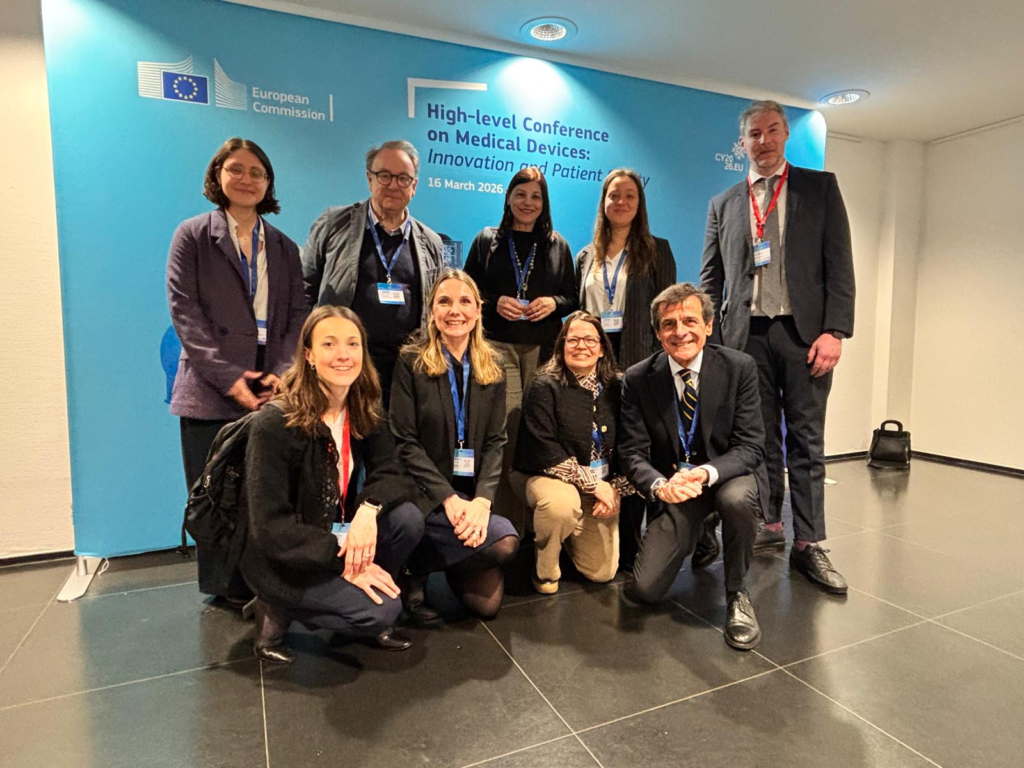
HEU‑EFS contributed directly to Breakout Session 3: “Breakthrough technologies for better care: turning guidance into reality.”
The panel included:
- Tom Melvin
- Russell Wheeler
Other experts present during the day included:
Marco Marchetti, Mariana (Portugal NCA Advisory Board), and Donal (Ireland NCA Advisory Board).
HEU‑EFS continues its mission to build a harmonized EU framework for Early Feasibility Studies, strengthening Europe’s capacity for responsible and patient‑centred medical device innovation.
Kevin Drisko was at CSI Devices for Heart Failure (DHF) in Frankfurt
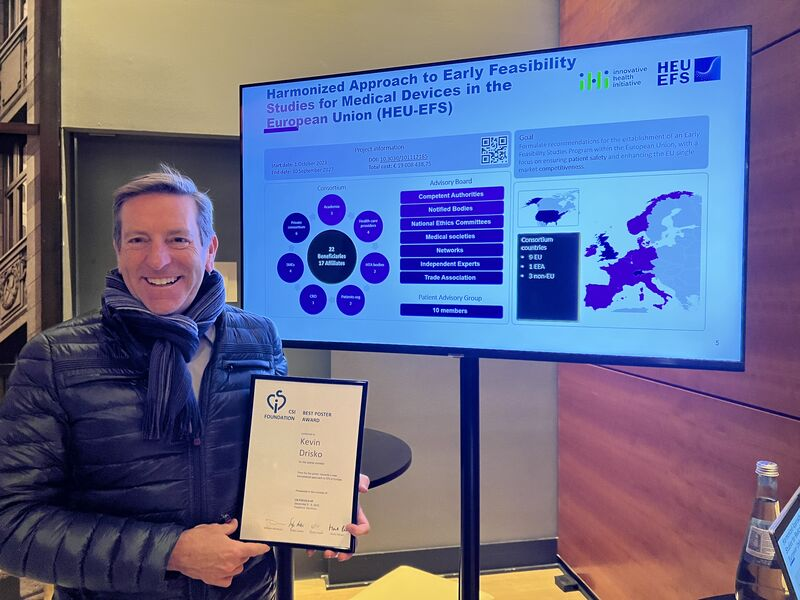
Kevin Drisko recently represented the HEU-EFS project at the CSI Devices for Heart Failure (DHF) conference in Frankfurt, presenting during the session titled “Time for the Pilots: Towards a New Harmonized Approach to EFS in Europe.”
The event provided an important platform to share the latest progress of the HEU-EFS initiative. Kevin highlighted that the pilot phase is about to begin, marking a major milestone for the project. These pilots will test the newly developed methodology through live use cases and are open to both consortium members and the wider public.
It was a productive and engaging week, filled with valuable discussions around Early Feasibility Studies (EFS) and innovation in heart failure technologies. The strong collaboration across partners has been instrumental in bringing the project to this exciting stage.
To cap off the conference, Kevin was honored with the award for Best Poster Presentation, recognizing both the quality of the work and the impact of the HEU-EFS project within the community.
ISPOR US 2025
At ISPOR US 2025, two sessions addressed critical aspects of pre‑market clinical research for medical devices, with a focus on Early Feasibility Studies (EFS) and the challenges associated with conducting early‑stage investigations in Europe and internationally.
Challenges of Pre‑Market Clinical Investigations of Medical Devices: A Multi‑Stakeholder Perspective
Oral Presentation
Moderator: Giuditta Callea
Speakers: Rosanna Tarricone, Carlo Federici, Helen Banks, Maria Luisa Buzelli, Francesco Benito Malandrini, Franco Luigi Zurlo, Marta Kerstan, Monica Tocchi, Nicolas Martelli, Tess Martin, Ornella Tangila Kayembe, Stephane Piat, Laura Sampietro‑Colom, Andrea Rappagliosi, Claudia Louati, Yasemin Zeisl, Daniel Beltran, Adrián Valledor, Marta Bragagnolo, Marit Erna Austeng, Alexandra Herborg Cornelius Poulsson, Kristian Kidholm, Lise Kvistgaard Jensen, Benedetta Brancadoro, Carmen Furno, Sebastian Kuhn.
This session examined the challenges and barriers involved in pre‑market clinical investigations (CIs) of medical devices and provided evidence to support the development of a harmonized European Early Feasibility Studies (EFS) Program.
Objectives
To gather perspectives from multiple stakeholders—including regulators, HTA bodies, clinical sites, notified bodies, patient associations, and technology developers—to inform future EFS policy and operational frameworks in the EU.
Methods
The work presented included:
- an online survey for technology developers,
- open‑ended interviews with stakeholders across Europe,
- and a focus group with patient advisory group members and patient associations.
Key Findings
- The EU is viewed as a preferred location for pre‑market CIs due to expertise, site capabilities, and timelines.
- A major barrier identified was limited dialogue across stakeholders, contributing to complexity and delays.
- Challenges also included risk–benefit evaluation, device risk assessment, study design, endpoints, enrolment targets, and a lack of clear templates or guidance.
- Patients identified fragmented information and insufficient time to evaluate participation risks as significant issues.
Conclusions
Stakeholders highlighted the multifaceted hurdles in bringing medical device innovations to market. Strengthening early interaction among all parties involved was identified as essential to improving clarity, reducing delays, and supporting a more efficient environment for pre‑market clinical investigations.
Bridging the Gap in Early‑Stage Clinical Research: Lessons for EU Stakeholders from the US FDA Early Feasibility Studies Program
Moderator: Giuditta Callea
Speakers: Dorothy Abel, Kevin Drisko
This session examined what the EU and other jurisdictions can learn from the U.S. FDA Early Feasibility Studies (EFS) Program, established to support innovative, significant‑risk medical devices when non‑clinical testing is insufficient.
Topics Addressed
- the purpose and characteristics of early‑stage clinical investigations for high‑risk devices;
- challenges faced when non‑clinical testing cannot fully inform device safety or performance;
- insights from the first decade of the FDA EFS Program, including best practices and oversight mechanisms;
- implications of Europe’s fragmented pre‑market regulatory landscape for conducting EFS;
- perspectives from regulators, academia, industry, clinical stakeholders, and findings from the HEU‑EFS project.
The session concluded with a moderated roundtable addressing audience questions, engaging stakeholders such as regulators, healthcare providers, patient associations, CROs, researchers, and technology developers.
Overall Event Perspective
Together, these two sessions demonstrated the growing relevance of Early Feasibility Studies in supporting responsible medical device innovation and highlighted the importance of harmonized frameworks, stakeholder collaboration, and evidence‑based policy development in both the EU and the U.S.
Italian Health Economics Association (AIES) XXIX Annual Conference
Setting Up a Harmonized Framework for Early Feasibility Studies in the European Union: What Value(s)?
Italian Health Economics Association (AIES) XXIX Annual Conference

At the XXIX Annual Conference of the Italian Health Economics Association (AIES), Session VIII focused on “Setting Up a Harmonized Framework for Early Feasibility Studies in the European Union: What Value(s)?”. The session brought together several speakers to discuss regulatory, methodological, and practical aspects of Early Feasibility Studies (EFS) for medical devices.
Chair: Giuditta Callea
Speakers included:
• Helen Banks – “Pre-market clinical investigations of medical devices: European regulatory framework and international standards”
• Maria Luisa Buzelli – “Challenges and barriers to pre-market clinical investigations of medical devices: a systematic literature review”
• Francesco Malandrini – “Pre-market approval pathways for clinical investigations of medical devices: a global perspective”
• Franco Luigi Zurlo – “State of the art of Early Feasibility Studies for medical devices”
The session provided insights into the current landscape of pre‑market clinical investigations, existing challenges, and the evolving approach to harmonizing Early Feasibility Studies within the European Union.